Hurricanes, ice storms, rolling blackouts — extended power outages have become more frequent and more disruptive as extreme weather events increase and aging grid infrastructure struggles to keep pace. For homeowners who have experienced a multi-day outage, the question is not whether to get a backup generator, but which type. The decision comes down to three factors: how long your outages typically last, how much of your home you want to power, and how much you are willing to spend upfront versus maintaining long-term. Standby generators are the premium, automatic solution for whole-home backup. Portable generators are the affordable, manual solution for partial-home backup. This guide covers both in detail — costs, capabilities, fuel options, transfer switch requirements, and the scenarios where each type makes the most sense.
Standby Generators: Automatic Whole-Home Backup
A standby generator is permanently installed beside your home, connected to a natural gas line or propane tank, and wired through an Automatic Transfer Switch (ATS) to your electrical panel. When utility power fails, the ATS detects the outage within seconds, starts the generator automatically, and transfers your home to generator power — usually within 10–30 seconds. When utility power returns, the ATS transfers back automatically and the generator shuts off. The entire process requires no human intervention. Standby generators are sized to run your whole home, including central air conditioning, well pumps, electric ranges, refrigerators, medical equipment, and home offices. They run on natural gas (most common when gas service is available) or propane (required for rural properties without gas). Natural gas standby generators run indefinitely as long as the gas line remains intact — there is no fuel to manage or store. Propane generators require a storage tank (250–1,000 gallons) with delivery service. The primary brands in the residential standby market are Generac (market leader), Kohler, Briggs & Stratton, Cummins (formerly Onan), and Champion. Generac holds approximately 70% of the residential market and offers the broadest dealer network.
Portable Generators: Manual Partial-Home Backup
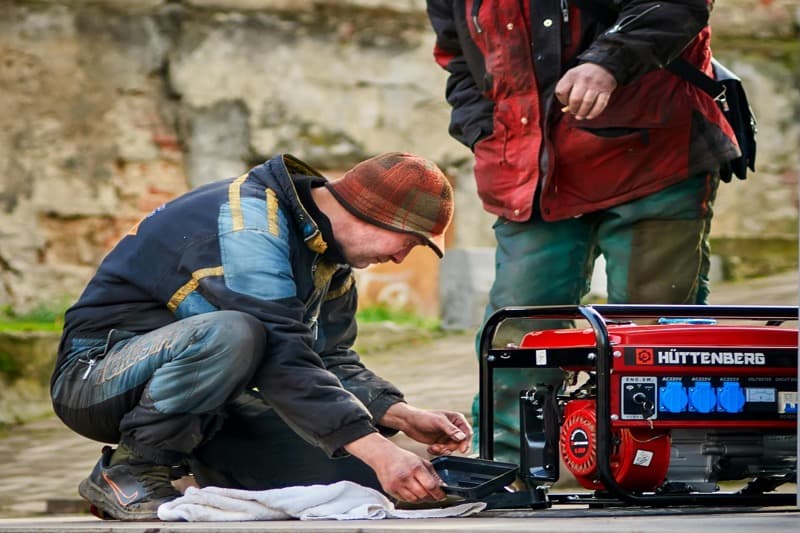
A portable generator is a gasoline-powered unit (some are dual-fuel gas/propane) that you store in a garage or shed and deploy manually when power fails. Portable generators come in sizes from 1,000 watts (enough for a few lights and phone charging) to 12,000 watts (enough for essential circuits including a window AC unit, refrigerator, and some outlets). They must be operated outdoors — at least 20 feet from any door, window, or opening — due to carbon monoxide emissions. Connection to your home's wiring must go through a transfer switch or interlock kit; direct connection to a panel without a transfer switch is illegal and can electrocute utility workers. The main appeal of portable generators is cost: a quality 7,500-watt generator from Honda, Generac, Champion, or Westinghouse costs $800–$2,500. The limitations: gasoline fuel requires storage and management (fuel goes stale in 30–90 days without stabilizer), extended outages require fuel runs that may be difficult during disasters, they require manual setup and refueling, and they cannot run central HVAC systems (only window/portable AC units).
Sizing: How Many Watts Do You Need?
Generator capacity is measured in watts or kilowatts. The critical concept is starting watts versus running watts — motor-driven appliances (AC compressors, refrigerators, well pumps, sump pumps) draw 2–3 times their running wattage at startup. A refrigerator that runs at 150 watts may draw 600 watts at startup. Sizing for a standby generator: add up the starting wattage of all loads you want to run simultaneously, then add a 25% safety margin. For portable generators: decide which circuits or appliances are essential and size to their peak simultaneous demand. Common sizing benchmarks: 10–14 kW standby — critical circuits (lights, outlets, refrigerator, one AC unit, well pump); 16–22 kW standby — most of the home including central AC; 24–32 kW standby — whole-home including large HVAC, electric range, multiple AC units. An electrician can do a precise load calculation by reviewing your panel and listing appliance wattages. This is worth the 30 minutes of their time — undersizing a generator results in it shutting down under load, which is exactly when you need it most.
- Refrigerator (1): 600–1,200 starting watts, 150–400 running watts
- Central AC (2-ton): 5,000–6,000 starting watts, 2,500–3,500 running watts
- Well pump (1/2 HP): 2,000 starting watts, 1,000 running watts
- Sump pump (1/2 HP): 2,000 starting watts, 800 running watts
- Electric water heater: 4,000–5,500 watts (running only, no startup surge)
- Lights (20 circuits at 100W each): 2,000 watts
- Typical whole-home essential load: 8,000–14,000 watts
Transfer Switch Requirements
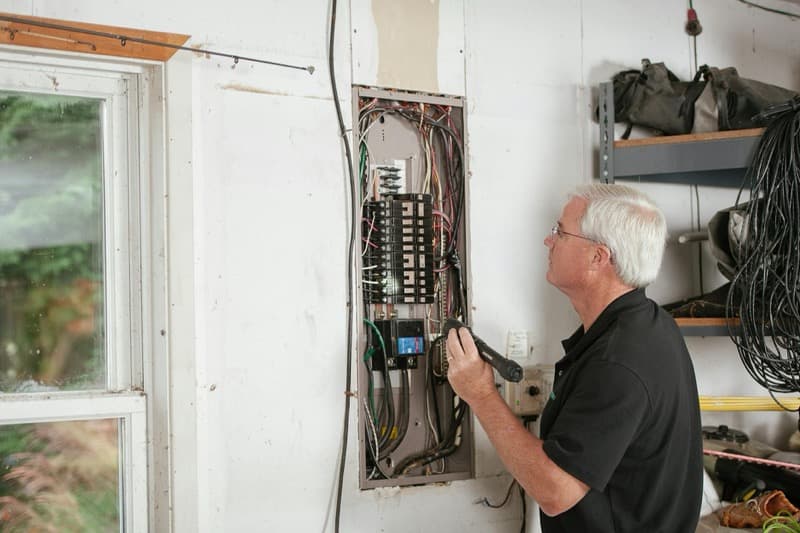
A transfer switch is legally required for connecting any generator to your home's electrical system. Without one, generator power can backfeed onto the utility lines, creating a lethal hazard for utility workers restoring power. The National Electrical Code (NEC Article 702) requires transfer equipment for emergency and standby systems. Options: Automatic Transfer Switch (ATS) — the standard for standby generators. Monitors utility power, starts the generator on outage, and reverses automatically when utility power returns. Cost: $500–$1,500 installed. Manual transfer switch — a simpler panel-mounted switch that you manually flip from utility to generator power. Requires you to start the generator, then flip the switch. Used with portable generators. Cost: $300–$800 installed. Interlock kit — a mechanical device on your existing panel that prevents the main breaker and generator breaker from both being on simultaneously. More affordable ($75–$200) than a transfer switch but requires you to manually select which circuits to power (you cannot run all circuits simultaneously). Only appropriate for portable generator use with careful load management.
Total Cost Comparison
- Portable generator (7,500W): $800–$2,500 equipment + $300–$800 transfer switch/interlock = $1,100–$3,300 total
- Standby generator 10–14 kW installed: $4,000–$8,000 all-in (equipment + transfer switch + gas line + concrete pad + permits + labor)
- Standby generator 16–22 kW installed: $7,000–$13,000 all-in
- Standby generator 24–32 kW installed: $12,000–$18,000 all-in
- Annual maintenance (standby): $150–$300/year service contract
- Annual fuel (standby on natural gas): $300–$700 for typical outage frequency
- Fuel for portable (7 days continuous): $200–$400 in gasoline at current prices
ROI Consideration: In states with frequent extended outages (Florida, Texas, Louisiana, Puerto Rico, and parts of the Northeast), a standby generator pays for itself through prevented losses: food spoilage ($500+), hotel costs ($150–$300/night for a family), and remote work disruption. Homebuyers consistently rate whole-home generators as a value-add feature, and studies show they return 50–80% of installation cost in home resale value in markets where outages are common.